







Skip to content
Feb26DigitalCRXCoverD1

Avoiding Allegations of Sexual Misconduct: 
Ethical Standards, Legal Consequences, and Best Practices

KellyRiedl


About the Author

Kelly Riedl, PA-C, CPHRM,
Senior Risk Management Consultant

Kelly Riedl, PA-C, CPHRM, is a Senior Risk Management Specialist at ProAssurance. She gained over 10 years of clinical experience in various specialties and clinical settings as a licensed physician assistant prior to starting her career in healthcare risk management.

FebCRxImageBanners

Introduction

Physician sexual misconduct is defined by the Federation of State Medical Boards (FSMB) as “behavior that exploits the physician-patient relationship in a sexual way.”1 According to FSMB, “[s]exual behavior between a physician and a patient is never diagnostic or therapeutic.”1 Physician sexual abuse of patients was historically underreported—until the widely publicized case of Larry Nassar.1, 2 Appointed as national medical coordinator and team doctor for USA Gymnastics in 1996 and Michigan State University team physician in 1997, Nassar would spend the next two decades using his position of power to sexually assault vulnerable women and children under the guise of medical treatment.3 In 2017 the Michigan Department of Licensing and Regulatory Affairs disciplinary board revoked his medical license.3 He eventually pled guilty to charges of child pornography and sexual assault in 2017 and was sentenced to spend 60 years in federal prison, up to 175 years in state prison in one Michigan case, and up to 125 years in state prison in a second Michigan case.3 As a result of the civil lawsuits, the victims were awarded over a billion dollars.4

Sexual misconduct violates multiple principles of the American Medical Association’s Code of Medical Ethics (AMA Code), which are widely recognized as professional standards that help to preserve patient trust.5 The AMA Code’s first principle states, “A physician shall be dedicated to providing competent medical care, with compassion and respect for human dignity and rights.”6

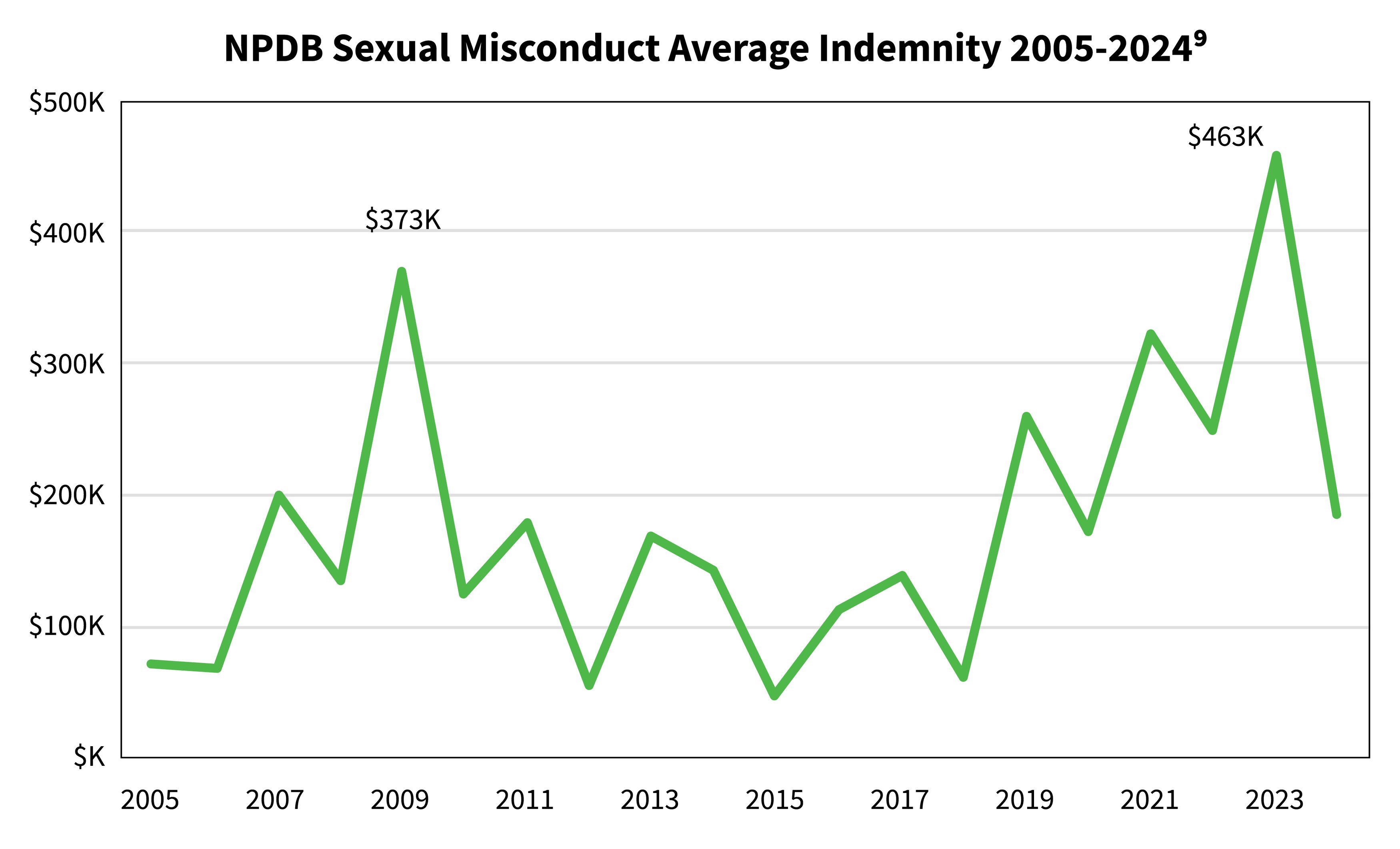
Not only is sexual misconduct by physicians unlawful and unethical—and a common reason for disciplinary action by medical boards—but it can also result in medical malpractice claims. In a study analyzing cases brought to the American Medical Association’s (AMA) Council on Ethical and Judicial Affairs over a five-year period, 12% were categorized as boundary violations, including romantic relationships with patients and sexual contact with patients.7 A national survey of physicians that took place during the same period as Nassar’s egregious acts found that 3.4% of respondents reported having sexual contact with a patient.8 A query from the National Practitioner Data Bank (NPDB) reveals paid claims involving sexual misconduct allegations against physicians have trended upward in the last five years with the highest volume of paid claims in 2024.9 The average indemnity paid for these claims has also increased over this same period.9
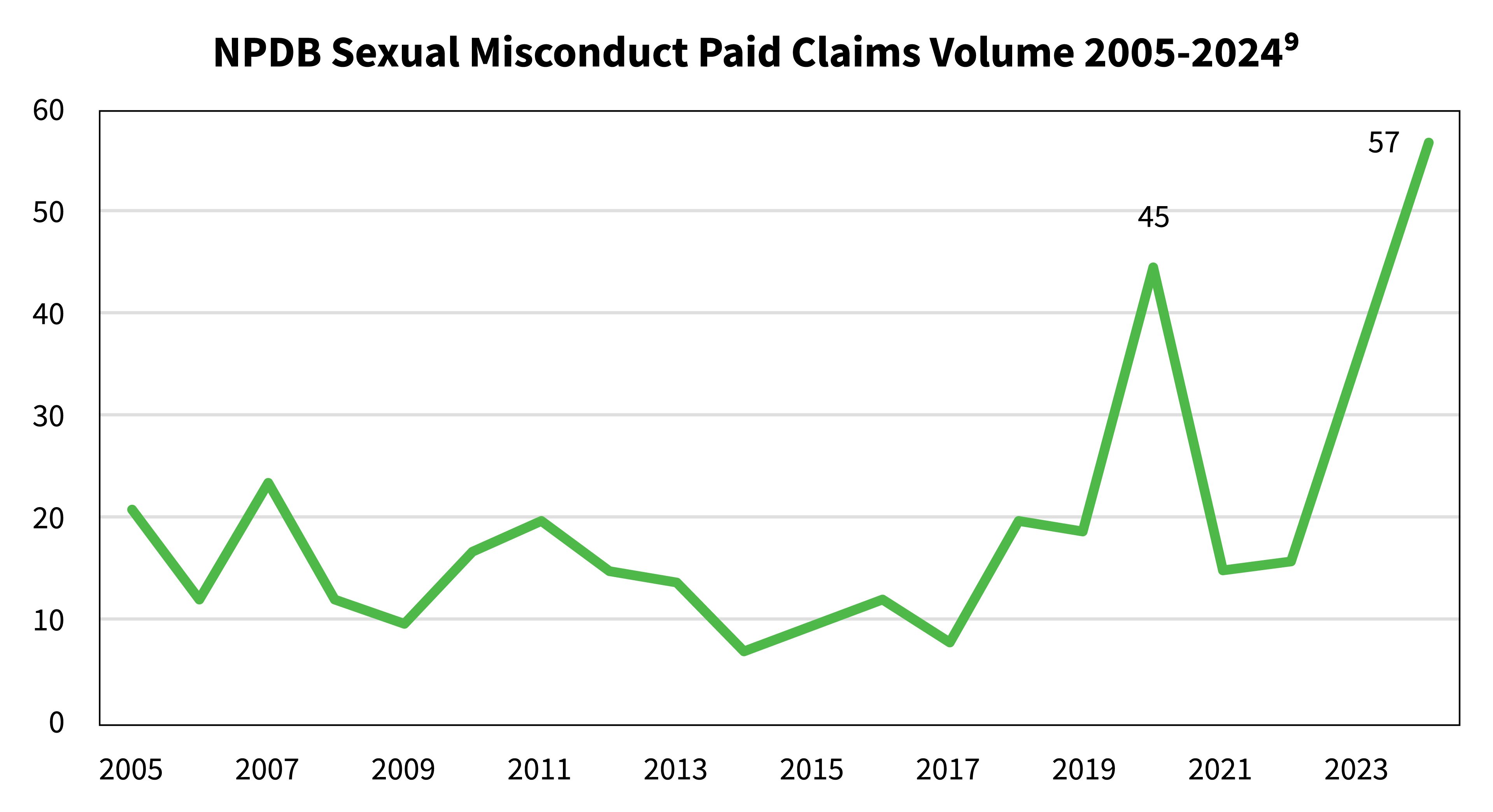
NPDB_Sexual_Misconduct_Paid_Claims_Volume NPDB_Sexual_Misconduct_Average_Indemnity

In 2020 FSMB expanded its guidelines to address and prevent sexual misconduct by physicians more effectively. These guidelines advocate for culture change across the continuum from medical school to licensed practice, including zero tolerance for harassment of any kind.1 They also bring awareness to the fact that sexual misconduct by physicians is significantly underreported.1 FSMB asks state medical boards to provide clear guidance to the public and health systems about their duty to report complaints in an easily accessible way.1

Communication, patient education, informed consent, and shared decision-making are highlighted in the FSMB’s guidelines as critical elements to meet patient expectations for professional conduct.1 This Claims Rx issue explores clinical encounters in closed claims where physicians fell short of professional conduct expectations and ultimately paid the price.

PROFESSIONAL LIABILITY INSURANCE POLICIES: SEXUAL MISCONDUCT EXCLUSIONS

scalesupdate-1

Professional liability coverage for sexual misconduct claims is limited, as it is usually subject to common exclusions in the policy. As a result of the exclusions, some policies will not pay for damages. In addition, these policies will not be obliged to provide a defense for a suit or claims alleging sexual activity, or acts in furtherance of sexual activity, including when they occur under the guise of professional services. However, some policies will defend such claims with various limitations until the insured is adjudicated to have committed or pleads guilty to the excluded act, at which point the insurer’s involvement ceases.

Insureds should always refer to their particular policy for the specific language and exclusions therein.


FebCRxImageBanners2

magglassCASE ONE:
Lack of Chaperone Pits Doctor’s Word Against Patient’s

The AMA Code’s opinion on use of chaperones states that “[e]fforts to provide a comfortable and considerate atmosphere for the patient and the physician are part of respecting patients’ dignity.”10 From a risk management standpoint, chaperone use can serve a dual purpose. It can protect patients by discouraging physicians who are tempted to act on sexual feelings, and it can protect physicians from false allegations of sexual misconduct by providing a witness who can testify to a physician’s appropriate behavior. These first two cases illustrate how a claim’s defensibility can be hindered without the proper use of a chaperone, versus strengthened by the presence of a well-trained chaperone.

Consider if your documentation sufficiently captures examinations of intimate parts as you review this case.

A 37-year-old woman presented to an orthopedist with complaints of right hip pain radiating down into her right posterior lower extremity and stopping in the heel. She explained that her symptoms started over a year prior and were intermittent, but over the prior three months her symptoms had been more constant.

The physician instructed the patient to change out of her clothes and put on a gown with the opening to the back while he stepped out of the room. The physician returned to the room alone and asked the patient to stand facing the wall for the exam. With ungloved hands, the physician reportedly palpated the patient’s buttocks, making skin-to-skin contact.

The next day the patient reported this recollection of events to the state medical board. In addition to the above details, she described extensive force such that she lost her balance and had to steady herself on the nearby exam table. She also said that during the exam, the physician asked her about sexual issues she might be experiencing; she felt this inquiry was unrelated to her symptoms.

DISCUSSION

scalesupdate-1

The medical board investigated these allegations. There was no documentation of an exam involving palpation of the patient’s buttocks. The medical records also did not mention the presence of a chaperone during the exam. The physician denied the allegations and indicated the available medical records showed no reason for him to examine the buttock region. The medical board concluded that there was a lack of evidence to establish the interaction as sexually motivated.

However, a year prior, the medical board received a separate but similar complaint from a patient. In that scenario, there was no chaperone; yet documentation supported the need to palpate the buttocks area in a patient he ultimately diagnosed with coccydynia. Considering two separate complaints, and a lack of a chaperone to testify on behalf of the physician, the medical board ordered the following disciplinary actions:

1. A fine to cover the costs of their investigation.
2. Three hours of medical education on the topic of medical recordkeeping.
3. The presence of a chaperone during any examination of the patient’s intimate parts, whether clothed or unclothed.
4. Documentation of personally informing all patients of his intent to touch intimate parts and giving patients the opportunity to accept or decline.

Notably, the terms of his contractual agreement with a large healthcare plan required his license to be free of material restrictions, which formally limited the physician’s scope of practice. As part of their continuing credentialing process, the plan became aware of the medical board’s sanctions, requiring a chaperone for certain examinations. The plan terminated the doctor’s participation effective immediately. This decision was appealed through an arduous and costly process requiring legal representation and multiple letters of support from professional colleagues.

FebCRxImageBanners3
magglass

CASE TWO:
Proper Use of Chaperone Improves Defensibility

A 25-year-old woman was brought to the emergency department (ED) via emergency medical services (EMS) after two days of severe abdominal pain. Upon arrival, a nurse placed the patient in an exam room and asked her to undress and put on a gown with the opening in the back. She was told that she could leave her underwear on. The physician entered the room and obtained a history. He reviewed the EMS records, which stated the patient’s chief complaint was suprapubic pain. The patient’s past medical history was significant for peptic ulcer disease and acid reflux. She reported taking an emergency contraceptive one day prior.

Consider which types of examinations you perform that may result in incidental touching of intimate parts. Do you discuss this possibility with patients to set proper expectations?

The physician completed an initial heart, lung, and abdominal exam in this room without a chaperone. The patient was moved to a different room for a pelvic exam in which a chaperone was present throughout the exam. The pelvic exam elicited pain, cultures were obtained, and a urinalysis was ordered. The physician explained her symptoms were likely a result of the emergency contraceptive and that she would be called with the culture and urinalysis results. The patient was discharged home with pain medications.

A week later the patient contacted an attorney. She also called the hospital and reported the physician groped her breasts, inappropriately touched her vagina, and smirked as he inflicted pain during her pelvic exam. The patient also pursued a medical malpractice claim against the physician for inappropriate touching and failure to meet the standard of care by not having a chaperone present during all stages of her exam.

DISCUSSION

scalesupdate

The hospital completed an internal investigation through peer review. During this process, the physician voluntarily suspended his privileges at the hospital. At the investigation’s completion, the hospital restored the physician’s privileges.

At deposition the patient stated that the physician placed his stethoscope under her gown with ungloved hands and groped her breasts during the heart and lung exam. She explained that other doctors in the ED completed this exam over the top of her gown. The patient also stated the physician examined her abdomen beneath her gown; she felt there was no need to press so low at the level of her pubic hairline. It was brought to her attention that EMS documented suprapubic pain in their report. She stated that she didn’t know what that word meant, but that she was having lower abdominal pain.

The patient, nurse chaperone, and physician all had a similar recount of the events during the pelvic exam—there was always a chaperone present and the exam elicited pain. The nurse’s documentation supported her presence throughout the exam. It noted that when additional supplies were needed, the nurse stayed in the room and called the unit clerk for delivery. Further, the nurse stated that she had been present as a chaperone for multiple pelvic exams with this physician and had never noticed anything out of the ordinary or concerning.

A defense expert supported the physician’s care. In addition, he stated that performing a heart, lung, and abdominal examination under the gown is completely appropriate. He also opined that the pelvic examination was appropriate and expected to elicit pain with her history of recently taking an emergency contraceptive.

With positive support from the nurse chaperone, thorough documentation, and positive expert testimony, defense counsel filed a motion for summary judgement in favor of the physician. The judge granted the motion, which ended the case.

RISK REDUCTION STRATEGIES
clipboard 1

Requiring a chaperone during sensitive medical exams and offering a chaperone for any exam when requested by a patient helps to protect patient dignity and supports patient modesty. Consider the following strategies to reduce the risks of false allegations of sexual misconduct:

  • Develop a chaperone policy and ensure this is communicated to patients and staff. Your policy should address:
    • Methods for communicating the availability of chaperones
    • To whom a chaperone is offered
    • For which examinations or procedures a chaperone is offered
    • Protocols for managing a patient’s refusal of a chaperone, including documentation
    • Chaperone roles, responsibilities, protocols, and training requirements
    • Clinician responsibilities, including documentation of the presence, name, and title of the chaperone in the medical record
  • Ensure chaperones are fully engaged during exams and positioned where they can appropriately witness what occurs.
  • Use chaperones even when patients are accompanied by a care partner or family member.
  • Give clear instructions about which articles of clothing the patient should remove and which should remain on.
  • Do not request the removal of undergarments unless it is necessary for an appropriate examination.
    • If undergarments must be removed, expose the smallest portion of the patient’s intimate area possible.
  • Provide a gown that will afford appropriate coverage (not too big or small) and direct the patient to use the fasteners or ties to close the gown.
  • Step out of the room while the patient undresses and dresses.
  • Wear gloves while examining a sensitive body area.

ADDITIONAL RESOURCES

University of Michigan Health: A Patient’s Guide to Sensitve Health Exams and Procedures
Overview of sensitive exams and procedures

Yale Health: Medical Chaperones for Sensitive Examinations, Treatments and Procedures
Patient education outlining chaperone policies and procedures

Vanderbilt University Medical Center: Medical Chaperone Policy
Sample chaperone policy and procedure

FebCRxImageBanners4

magglassCASE THREE:
Procedural Touch Misunderstandings

Chaperone use is only one aspect of guarding against sexual misconduct allegations. The importance of educating patients about “procedural touching” and creating a comfortable and respectful patient environment—particularly for examinations that are sensitive or intimate—cannot be overstated. Physicians cannot assume patients understand the necessity, location, and extent of procedural touch. Allegations of sexual misconduct often involve patient misunderstanding of procedural touch as exemplified in the following case.

Consider which tools may have allowed for a better explanation of procedural touch as you review these case facts. 

A 45-year-old woman presented to a gastroenterologist with complaints of severe rectal pain for the past month. She explained that similar symptoms had come and gone over the years but were currently persistent. She also explained a previous diagnosis of hemorrhoids as the cause of her pain. She denied changes in bowel habits or rectal bleeding but admitted to occasional constipation. She delivered four children vaginally over the years without complications.

The physician was accompanied by a female medical assistant. He explained that he would need to do a rectal exam, including an anoscopy with a lighted scope. She agreed to proceed, and the physician asked her to remove her clothes from the waist down. She did so while the physician stepped out and the medical assistant stayed in the room. When the physician returned, the medical assistant informed him the patient was currently experiencing a lot of pain. He asked the patient to bend forward over the exam table so he could complete the exam. The exam included a digital rectal exam, anoscopy, and vaginal exam. During the rectal exam the patient’s pain was intolerable, necessitating the application of topical lidocaine.

After the exam the physician explained he did not find anything to explain her symptoms and told her to get dressed.She did so while both the physician and medical assistant stayed in the room. She was handed a prescription for topical lidocaine, and no planned follow-up was recommended.

The physician documented that his digital rectal examination was normal with no obvious fissure or hemorrhoids, but that it did elicit pain. He documented the application of topical lidocaine, location unspecified. He also documented a normal anoscopy and vaginal examination.

Two days later the police contacted the office and spoke with the medical assistant. The police explained the patient reported inappropriate touching of her vagina during a recent examination. After the medical assistant answered their questions, the police informed her that a report would be made to the state department of health for further investigation. The department of health conducted their investigation and found no violations in care.

Unfortunately, the patient pursued a medical malpractice claim against the physician one year later. She alleged lack of informed consent to examine her vagina resulted in emotional distress.

DISCUSSION

scalesupdate

During pretrial testimony, the physician, medical assistant, and patient differed in their recollections of that day’s events. The physician testified he informed the patient he planned to include a vaginal exam prior to touching her and that he would go through the exam step-by-step, inviting her to tell him to stop if at any point she was uncomfortable. He also recalled the patient being covered with a drape. Both the medical assistant and patient testified that a vaginal exam was not discussed prior to the patient being touched, and that the patient was not covered with a drape. The medical record did not provide evidence to support the physician’s recollection of events.

The plaintiff’s expert opined that it is well within the standard of care to include a vaginal exam as part of the anal and rectal exams in a female complaining of rectal pain. However, the expert noted the physician breached the standard of care when he did not gain explicit consent from the patient to perform each step of the exam. Multiple defense experts opined that the physician met the standard of care by explaining all planned steps and using a female chaperone during the examination.

Ultimately the case was settled, which triggered two separate obligations. First, the medical malpractice carrier had a duty to report the settlement to the NPDB. Those authorized to query the NPDB, such as state licensing boards and hospitals, can view the information in this report (e.g., settlement amount, treatment performed, allegations, and injuries). Second, in this state, the settlement triggered an obligation for the physician to self-report to the state medical board within 30 days.

RISK REDUCTION STRATEGIES
clipboard 1

A formal consent process is imperative prior to procedural touch in sensitive areas. While there may be a reasonable explanation for extending procedural touch to adjacent sensitive areas, patients must clearly understand this reasoning and give consent prior to being touched in these additional areas. Additionally, taking proactive measures to ensure comfort before starting an exam can reduce interruptions, necessitating added procedural touching. All patients differ in their sensitivity, expectations, and anatomical understanding. Consider the following risk reduction strategies to avoid procedural touch misunderstandings:

  • Before procedural touch:
    • Explain what you intend to do with the patient’s permission and why.
    • Use models or pictures as an educational tool to depict the anatomical necessity of procedural touch extending beyond a certain area.
    • Obtain separate informed consent for different procedures, particularly when they will involve procedural touch.
    • Document the details of each informed consent obtained.
    • Do not consider patient silence as consent for procedural touch.
    • Inform the patient the examination can be stopped at any time and stop the examination if the patient requests it.
    • Put on gloves.
  • During procedural touch:
    • Continue to explain how your touch relates to its clinical purpose, particularly when intimate areas are involved.
    • Share findings or lack of findings as you proceed.
    • Use only the amount of physical contact necessary for diagnosis and treatment.
    • Remain vigilant for patient signs of discomfort (e.g., the patient pulls away when touched) and possible misunderstandings of procedural touch.
    • Stop the examination if the patient asks you to.
    • Ask yourself what a neutral outsider would say while observing your conduct and adjust it accordingly.
  • At the conclusion of the examination:
    • Cover the patient in a drape so no sensitive areas remain exposed during any explanation of findings and plan.
    • Leave the room and allow the patient adequate time to dress.
    • Tell patients what they should do after dressing.
    • Document when chaperones are present during the examination, including their full name and job title.

ADDITIONAL RESOURCE

Medical Board of California: Touch and the Practice of Medicine
Considerations to enhance trust and minimize confusion

FebCRxImageBanners5

magglassCASE FOUR:
Sexual Exploitation During Psychotherapy

The AMA Code’s opinion on professional self-regulation states “[r]omantic or sexual interactions detract from the goals of the patient-physician relationship and may exploit the vulnerability of the patient, compromise the physician’s ability to make objective judgments about the patient’s healthcare, and ultimately be detrimental to the patient’s well-being.”11

The American Psychiatric Association (APA) further interprets the AMA Code’s principles with annotations to provide guidance specifically in the context of psychiatry.12 Highlighting the highly personal and sometimes intensely emotional nature of the psychiatrist-patient relationship, the APA prohibits psychiatrists from exploiting the patient to gratify their own needs; psychiatrists must ensure their conduct does not harm patient-physician boundaries.13 The following case exemplifies how boundary crossing can lead to dire consequences for psychiatrists and threaten patient safety.

Consider how you set proper boundary expectations with patients as the details of this case unfold. 

A woman was under the care of a psychiatrist for five years. During this time, she was treated for bipolar disorder, borderline personality disorder, and depression. She had a history of multiple suicide attempts and hospitalizations related to these attempts.

After caring for this patient for five years in his solo practice, the psychiatrist began a sexual relationship with her. He no longer saw the patient in his office, but he continued to prescribe her psychiatric medications. Nine months into the sexual relationship, the psychiatrist’s wife found out about the affair. Soon after this, the patient was notified by email that the psychiatrist-patient relationship was terminated. No arrangements were made for continuity of care, and within months, the patient was hospitalized for a suicide attempt.

The patient filed a claim against the psychiatrist for medical malpractice, breach of fiduciary duty, and intentional infliction of emotional distress.

DISCUSSION

scalesupdate

The psychiatrist’s acts in this case were a clear violation of the AMA Code, which prohibits romantic or sexual relationships with patients. They were also a clear violation of his state medical board’s policy on medical practitioners and sexual misconduct, which strictly prohibited physicians from sexual relations with patients. Further, when sexual exploitation is determined during any medical board prosecution, the law required the physician’s license to be revoked. In this state, any sexual contact with a patient is considered sexual exploitation.

The state law also allowed former patients to sue psychotherapists for injuries caused by sexual contact if the contact occurred during the therapy period, within two years following termination of therapy, or by means of therapeutic deception.

During discovery and the deposition process, medical record documentation was inconsistent with the patient’s recollection of events and emails produced into evidence. Medical records indicated the physician declined an intimate relationship with the patient and reset boundary expectations with her. Meanwhile, the patient testified that the physician ordered an affair as part of therapy. Emails from the physician reflected expressions of his love and desires for the patient. Additionally, he admitted to being in a sexual relationship with the patient.

In the process of obtaining defense experts, the state regulatory board hearing took place. At this hearing the physician voluntarily surrendered his medical license. The defense team and physician subsequently determined that the medical malpractice case needed to be settled with payment to the patient.

RISK REDUCTION STRATEGIES
clipboard 1

Data suggests that boundary violations among physicians, particularly those involving sexual relationships with patients, are more prevalent among certain groups. Male doctors between the ages of 40 and 49—especially those in psychiatry, family medicine, and obstetrics/gynecology—are at higher risk for these violations.14, 15, 16 It is imperative that clinicians are aware of their own behaviors and remain vigilant of patient behaviors to prevent boundary misunderstandings or violations.

Consider the following risk reduction strategies:17, 18

  • Participate in ongoing education and training related to professional boundaries and ethics.
  • Establish clear, professional relationships with all patients.
  • Avoid clinical or nonclinical contact a patient may perceive as a romantic or sexual overture.
  • Be vigilant for signs of patient overdependence, idealization, or other indicators of increased vulnerability, and address these issues promptly.
  • Adhere to ethical guidelines on intimate relationships with former, present, and future patients.
  • Understand and follow the medical practice act in the jurisdiction where you practice as it relates to intimate relationships with former, present, and future patients.
  • Avoid sexual innuendo, sexually suggestive humor, and sexually provocative remarks in professional settings.
  • Refer friends and former intimate partners to other clinicians. If treatment is necessary, make every effort to treat them with the same professional judgment used for other patients, for example, by taking adequate histories, performing thorough physical examinations, providing counseling on sensitive issues, and keeping appropriate medical records.
  • Use caution when engaging in nonclinical communication with current patients, including interactions by telephone, email, text messaging, or social media.
  • If a romantic relationship with a patient cannot be avoided, and it is allowed by state law, formally terminate the therapeutic relationship before the romantic relationship begins in the manner directed by the state law.
    • Follow any state laws that set a waiting period between termination of the therapeutic relationship and commencement of an intimate one.
  • Document all patient interactions thoroughly, especially when discussing sensitive issues or when there is a potential for misinterpretation of actions or intentions.

ADDITIONAL RESOURCES

AMA Ed Hub: Sexual and Romantic Boundary Violations
CME course for clinicians about boundaries and how to avoid boundary violations

FSMB: Professional Boundaries Educational Series
Scenario-based video CME that highlights the importance of maintaining professionalism and ethical standards in all professional interactions

FebCRxImageBanners6

Conclusion

Maintaining clear boundaries and fostering open communication are essential for building trust and protecting both patients and physicians from misunderstandings, including allegations of sexual misconduct. The implementation of chaperone policies, thorough documentation, and patient education about procedural touch serve as vital safeguards in clinical practice. By remaining vigilant and proactive, clinicians can help ensure a safe, respectful environment that upholds the dignity of all involved.

Need a printer-friendly version of this issue? View PDF version here.

Endnotes

Many risk management resources and past editions of Claims Rx are available on the ProAssurance website, by calling Risk Management at 844-223-9648, or by email at RiskAdvisor@ProAssurance.com.

1. “Physician Sexual Misconduct,” Federation of State Medical Boards, adopted May 2020, report-of-workgroup-on-sexual-misconduct-adopted-version.pdf.

2. Chinmoy Gulrajani, “A Duty to Protect Our Patients from Physician Sexual Misconduct, ”The Journal of the American Academy of Psychiatry and the Law 48, no. 2 (May 2020), https://jaapl.org/content/early/2020/05/11/JAAPL.200014-20.

3. “Who is Larry Nassar? A Timeline of his Decades-Long Career, Sexual Assault Convictions, and Prison Sentences,” USA Today, accessed September 26, 2025, https://www.usatoday.com/pages/interactives/larry-nassar-timeline/

4. “Larry Nassar: US Justice Department to Pay Abuse Survivors $138m,” BBC News, accessed November 11, 2025, https://www.bbc.com/news/world-us-canada-68841682

5. “Code of Medical Ethics,” American Medical Association (AMA), accessed September 26, 2025, https://code-medical-ethics.ama-assn.org/.

6. “AMA Principles of Medical Ethics,” AMA, accessed September 26, 2025, https://code-medical-ethics.ama-assn.org/principles

7. Kavita Shah Arora, Sharon Douglas, and Susan Dorr Goold, “What Brings Physicians to Disciplinary Review? A Further Subcategorization,” AJOB Empirical Bioethics 5, no. 4, 53–60 (May 2014), https://doi.org/10.1080/23294515.2014.920427

8. T. Baker, J. Coverdale, and E. Chiang, “A National Survey of Physicians’ Behaviors Regarding Sexual Contact with Patients.” Southern Medical Journal 89, no. 10, 977–982 (1996), https://pubmed.ncbi.nlm.nih.gov/8865790/

9. National Practitioner Data Bank Public Use Data File, [Aug 26, 2025], U.S. Department of Health and Human Services, Health Resources and Services Administration, Bureau of Health Workforce, Division of Practitioner Data Bank.

10. “Code of Medical Ethics: Opinion 1.2.4: Use of Chaperones,” AMA, accessed September 26, 2025, https://code-medical-ethics.ama-assn.org/ethics-opinions/use-chaperones

11. “Code of Medical Ethics: Professional Self-Regulation,” AMA, accessed September 26, 2025, https://code-medical-ethics.ama-assn.org/chapters/professional-self-regulation

12. “Ethics,” American Psychiatric Association (APA), accessed September 26, 2025, https://www.psychiatry.org/psychiatrists/practice/ethics

13. “The Principles of Medical Ethics with Annotations Especially Applicable to Psychiatry,” APA (2013 Edition), https://www.psychiatry.org/getmedia/3fe5eae9-3df9-4561-a070-84a009c6c4a6/2013-APA-Principles-of-Medical-Ethics.pdf

14. Elizabeth Brooks et al., “Physician Boundary Violations in a Physician’s Health Program: A 19-Year Review,” The Journal of the American Academy of Psychiatry and the Law 40, no. 1, 59-66 (January 2012), https://jaapl.org/content/40/1/59?ijkey=f213cdd0a9e968bcbdbcb659151b48dc8e154ed2&ke 

15. Randy Sansone and Lori Sansone, “Crossing the Line: Sexual Boundary Violations by Physicians,” Psychiatry (Edgmont) 6, no.6, 45–48 (June 2009), https://pubmed.ncbi.nlm.nih.gov/19724761/

16. Kunal K. Sindhu et al., “Honoring the Public Trust: Curbing the Bane of Physician Sexual Misconduct,” Journal of Law and Biosciences 9, no. 1 (March 2022), https://pubmed.ncbi.nlm.nih.gov/35371518/.

17. ACOG Committee Opinion Number 796: Sexual Misconduct,” American College of Obstetricians and Gynecologists (ACOG), 135, No. 1: e43-e50 (January 2020), https://doi.org/10.1097/AOG.0000000000003608.

18. Kehinde Eniola, “The Ethics of Caring for Friends or Family,” Family Practice Management 24, no. 4: 44 (July/August 2017), https://www.aafp.org/pubs/fpm/issues/2017/0700/p44.html.